
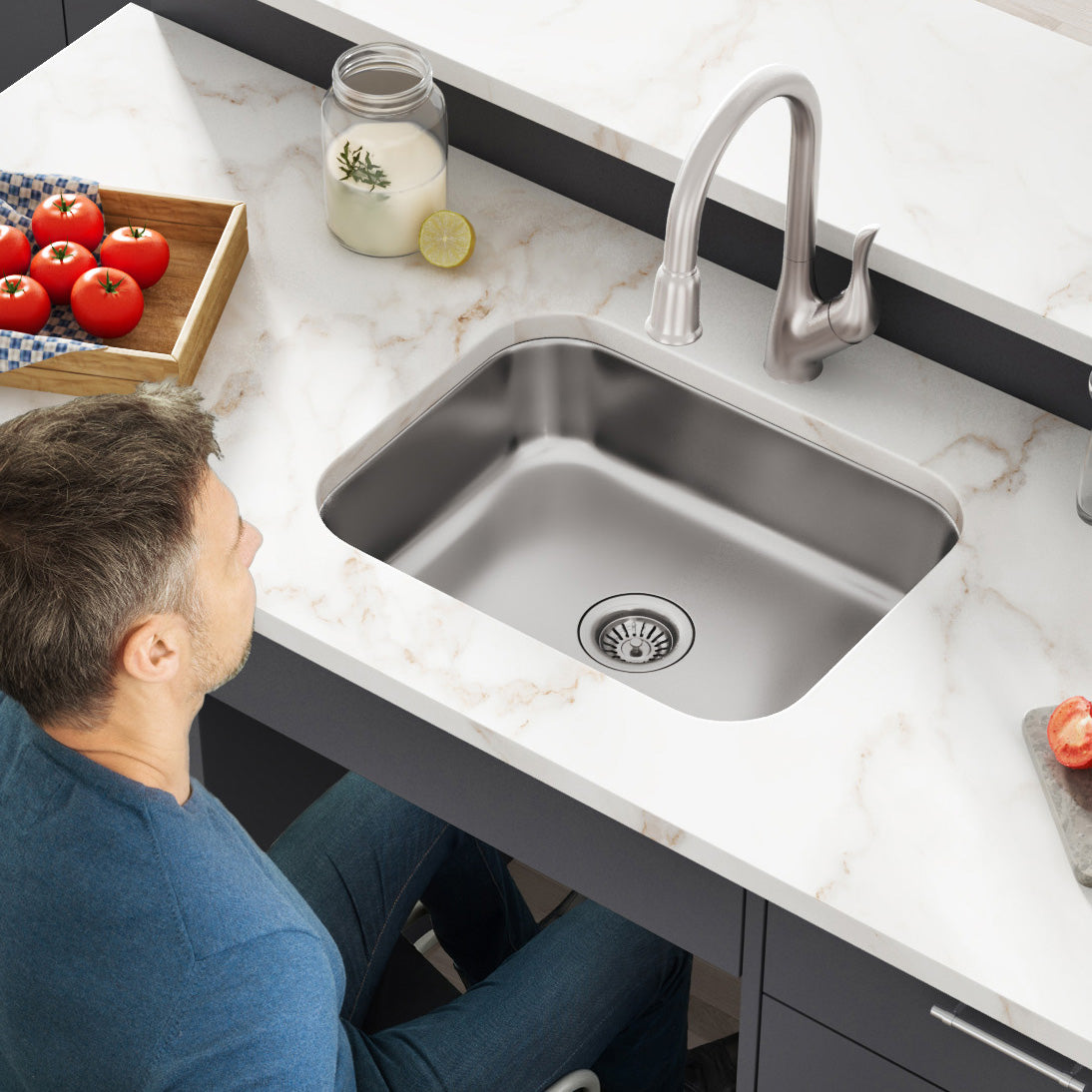



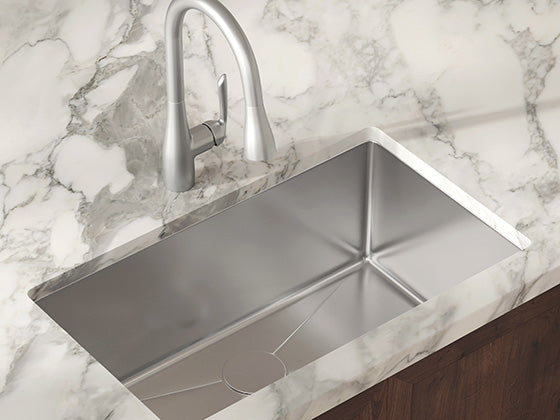
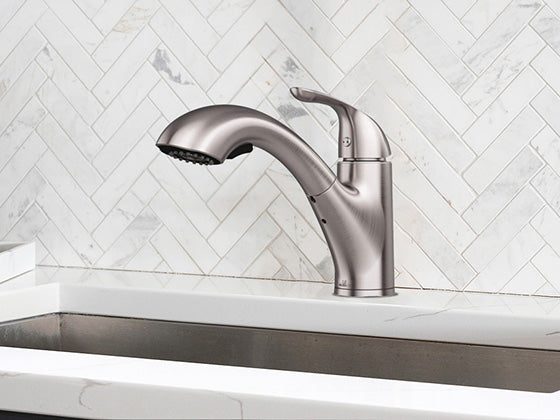
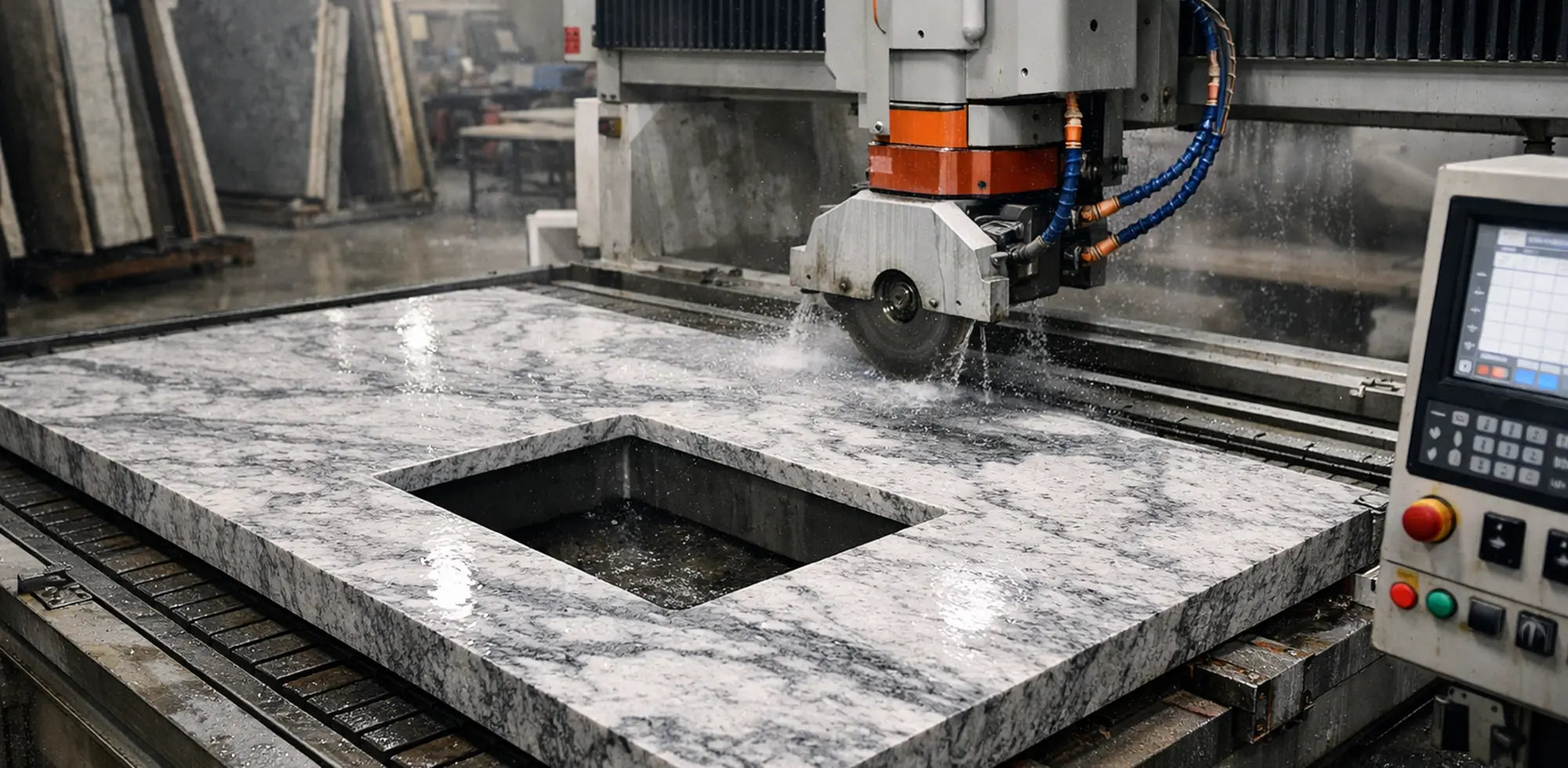
A sink substitution can create a countertop problem. Allora helps fabricators work with stocked kitchen sink models, clear cutout information, and consistent dimensions for repeat slab work.
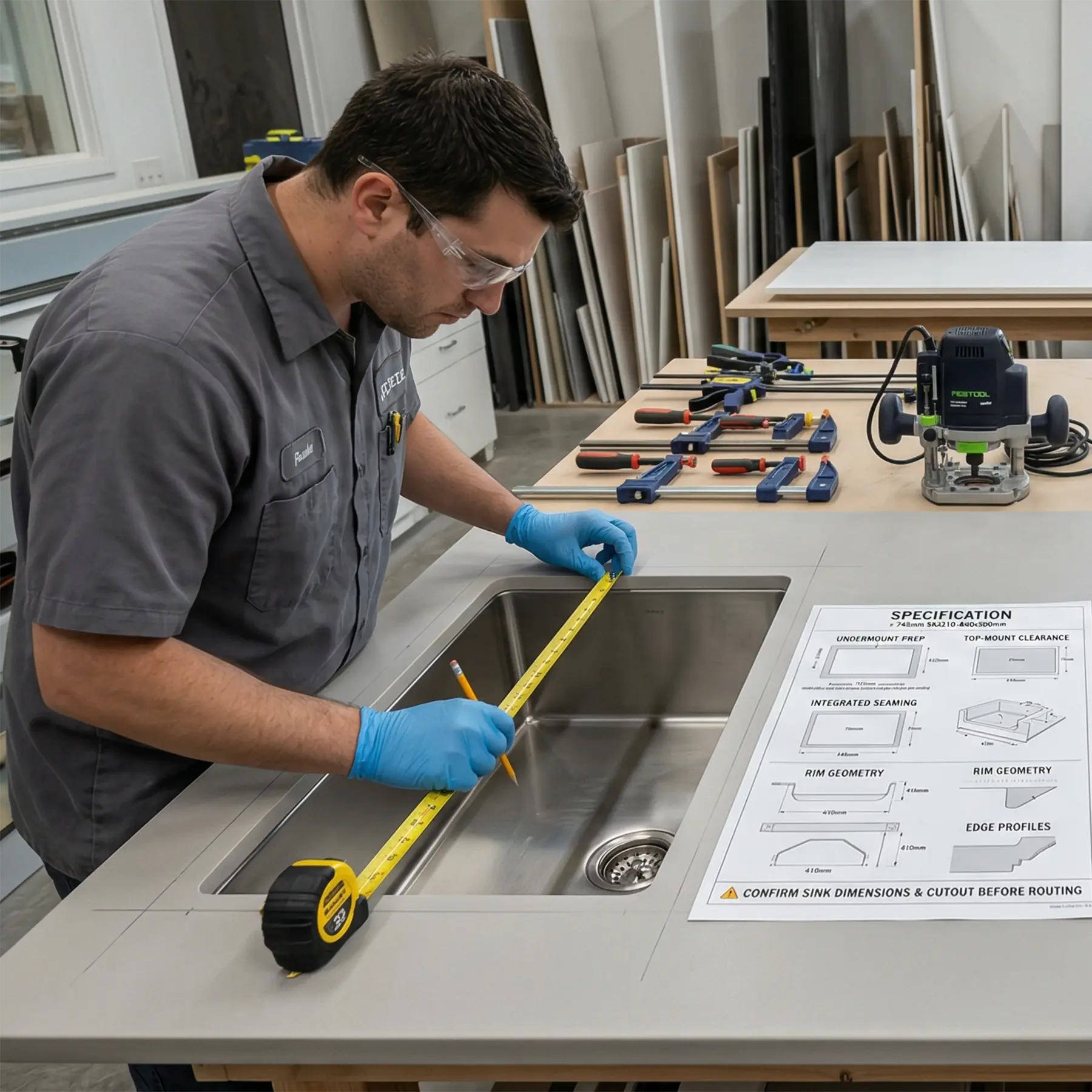
Built for How Fabrication Shops Source Sinks
Countertop fabricators don’t evaluate sinks the way an architect or developer does. You’re running production math: Does this sink match the cutout template already programmed into my CNC? Will the undermount clips clear the cabinet rail without my installer grinding down hardware on site? Is the rim profile consistent enough that I can run 80 slabs without re-adjusting reveal lines halfway through the batch? And the one that kills more margin than any other: can I actually get 80 of these in four weeks, or will I be chasing backorders with slabs stacked on my shop floor and a builder threatening to pull the account?
Allora USA is built to answer those questions before the first slab hits the saw. Consistent cutout dimensions across every production run. Undermount clip systems that clear standard cabinet configurations without field modification. Confirmed inventory depth on volume orders. And the same SKU at the same price when the builder adds 40 more units next quarter.
Consistent Cutout Dimensions That Protect Your Templates
Every undermount kitchen sink and bathroom sink in the Allora USA line uses published cutout dimensions that remain consistent between production runs. When you program a template into your CNC or bridge saw, that template works on the next order and the order after that. No re-templating between batches. No discovering that the rim shifted 1/8″ after you’ve already cut the slab. Template reuse is throughput. Template failure is rework, wasted material, and margin you never recover.
Undermount Clip Clearance — No Field Improvisation
Allora USA undermount sinks use clip systems designed to clear standard cabinet rail depths and common dishwasher bracket positions. The mounting hardware is included and documented in the spec sheet. Your installer doesn’t have to grind down clips on site, improvise clearance solutions, or call you from the jobsite because the hardware doesn’t fit. Every field callback on a clip problem costs you the installer’s time, the builder’s patience, and a piece of your reputation on that account.
Inventory Depth That Matches Your Production Runs
When a builder sends you 80 units, you need 80 sinks — not 60 now and 20 in six weeks. Partial shipments break your production sequence: slabs get staged without sinks, shop floor space gets consumed, and your throughput drops on every other job while you wait for the backorder. Allora USA maintains warehouse inventory depth from Sterling, Virginia, with confirmed counts on volume orders so your production run doesn’t stall because the supplier couldn’t deliver the full quantity.
Template-Ready Spec Sheets — Program Before You Order
Every Allora USA sink includes a spec sheet with cutout dimensions, overall dimensions, bowl depth, drain position offset, undermount clip positions, rim profile, and minimum cabinet width. The data you need to program a template, quote a job, or verify compatibility is documented before you order — not discovered on the shop floor after you’ve already committed the slab. A $200 sink on a $1,200 slab means the spec sheet needs to be right before the saw starts, not after.
How Sink Sourcing Changes by Countertop Material
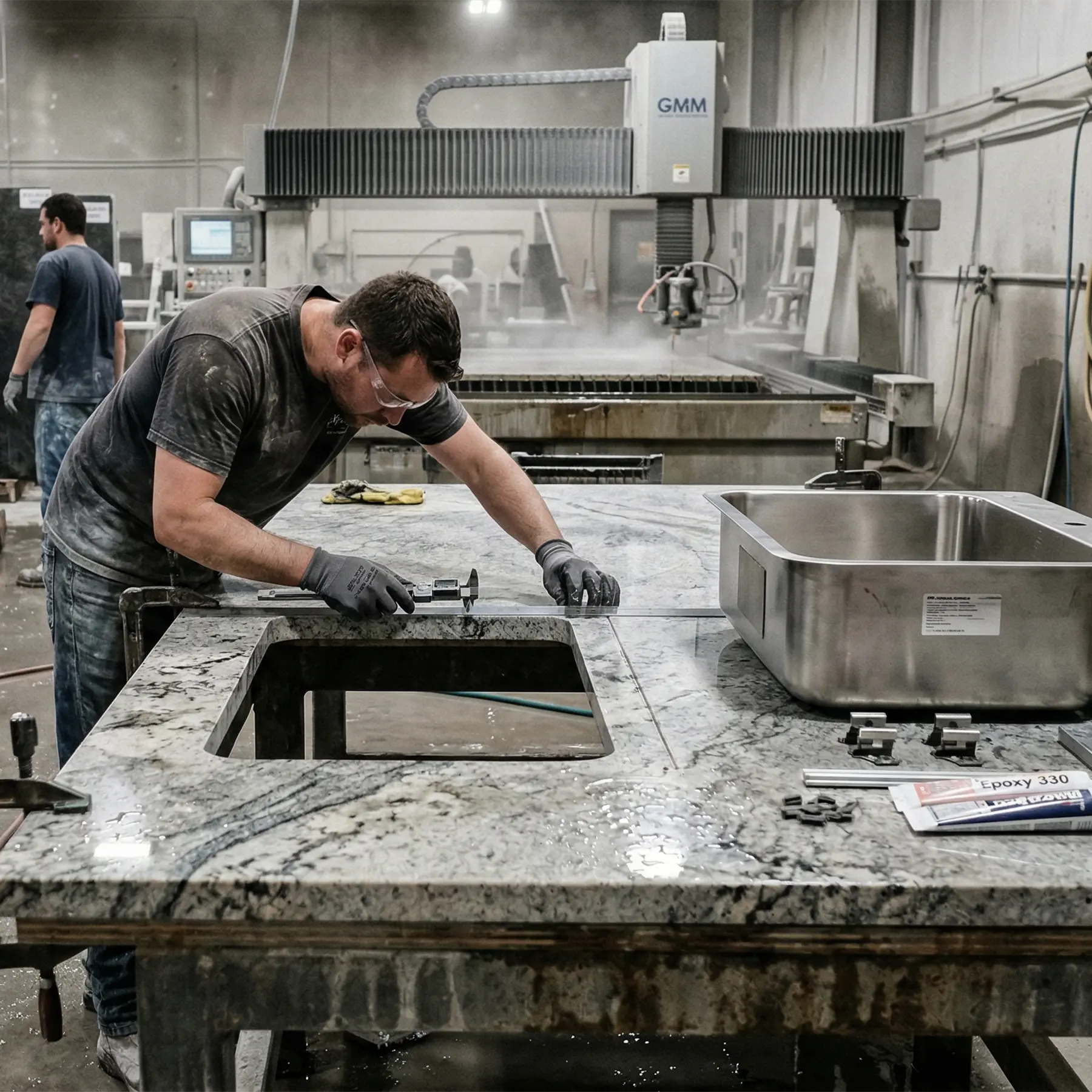
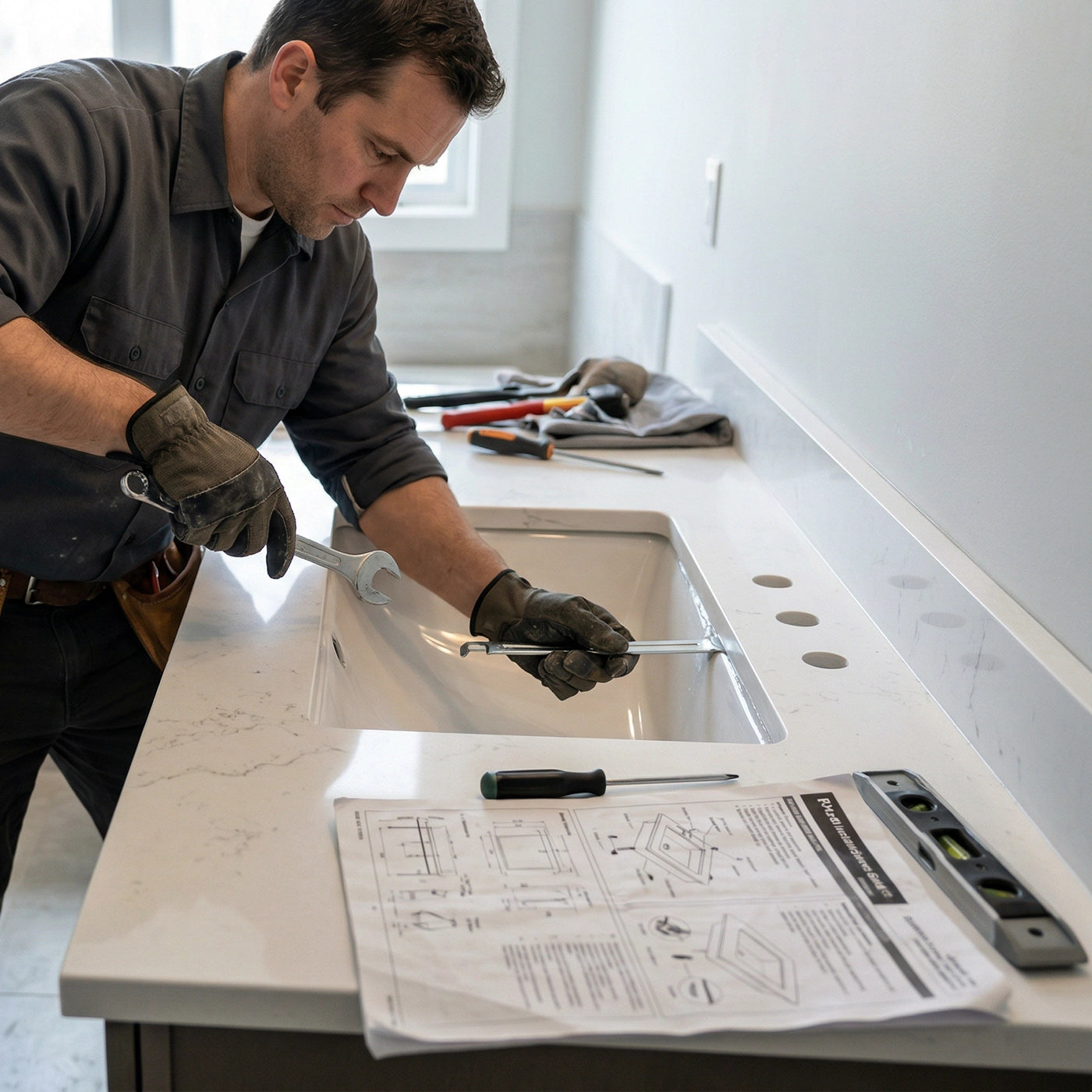
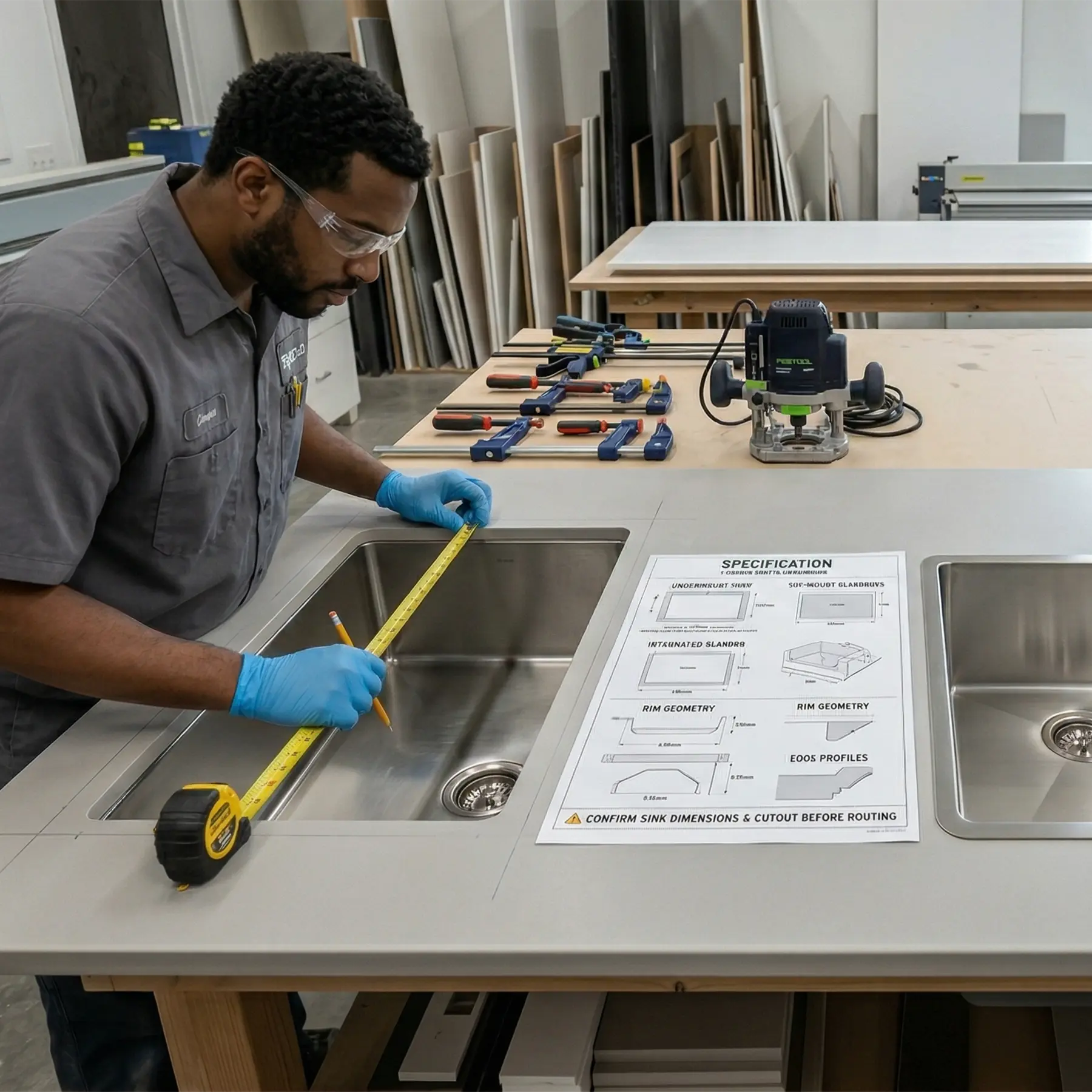
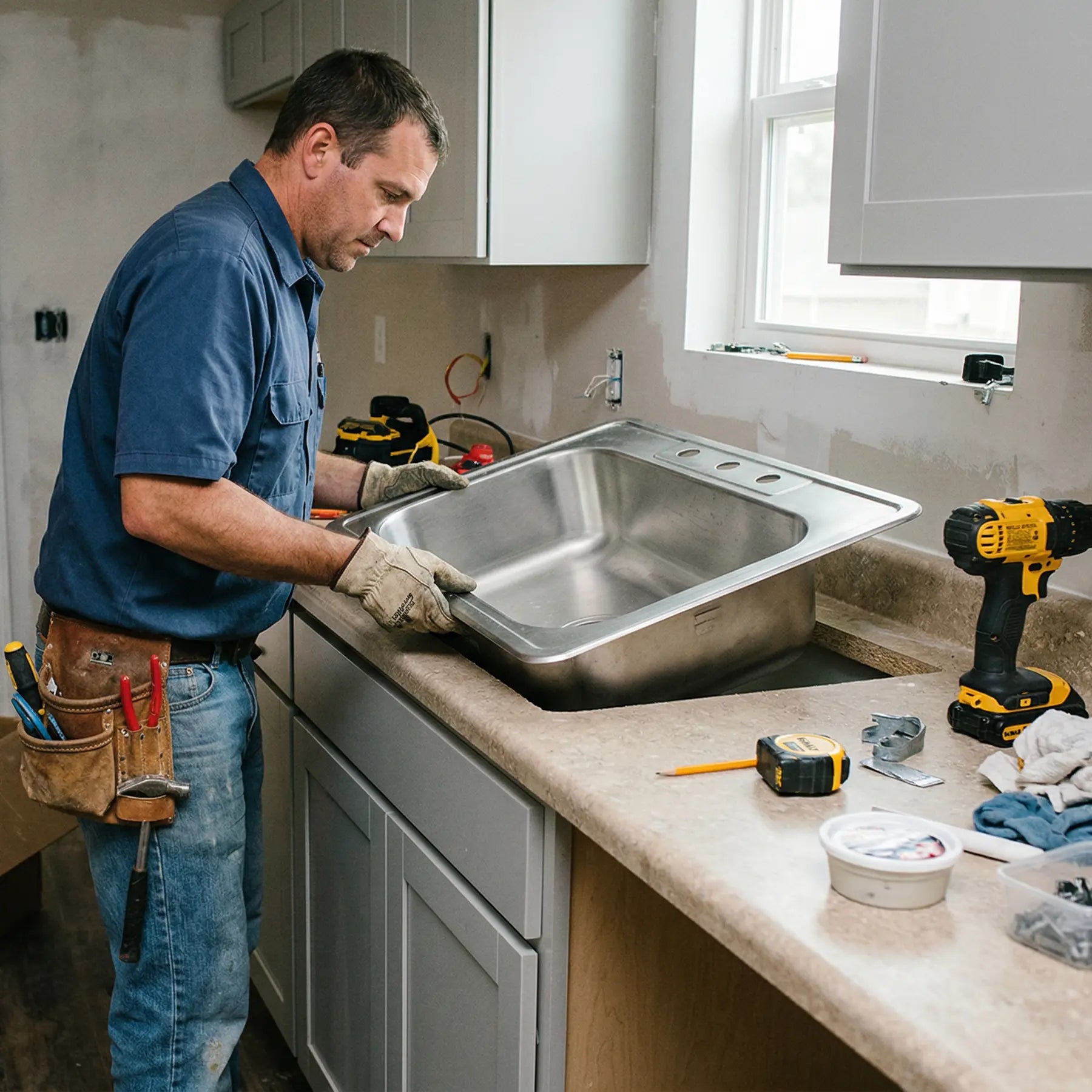
Sinks Designed for Fabrication Shop Workflow
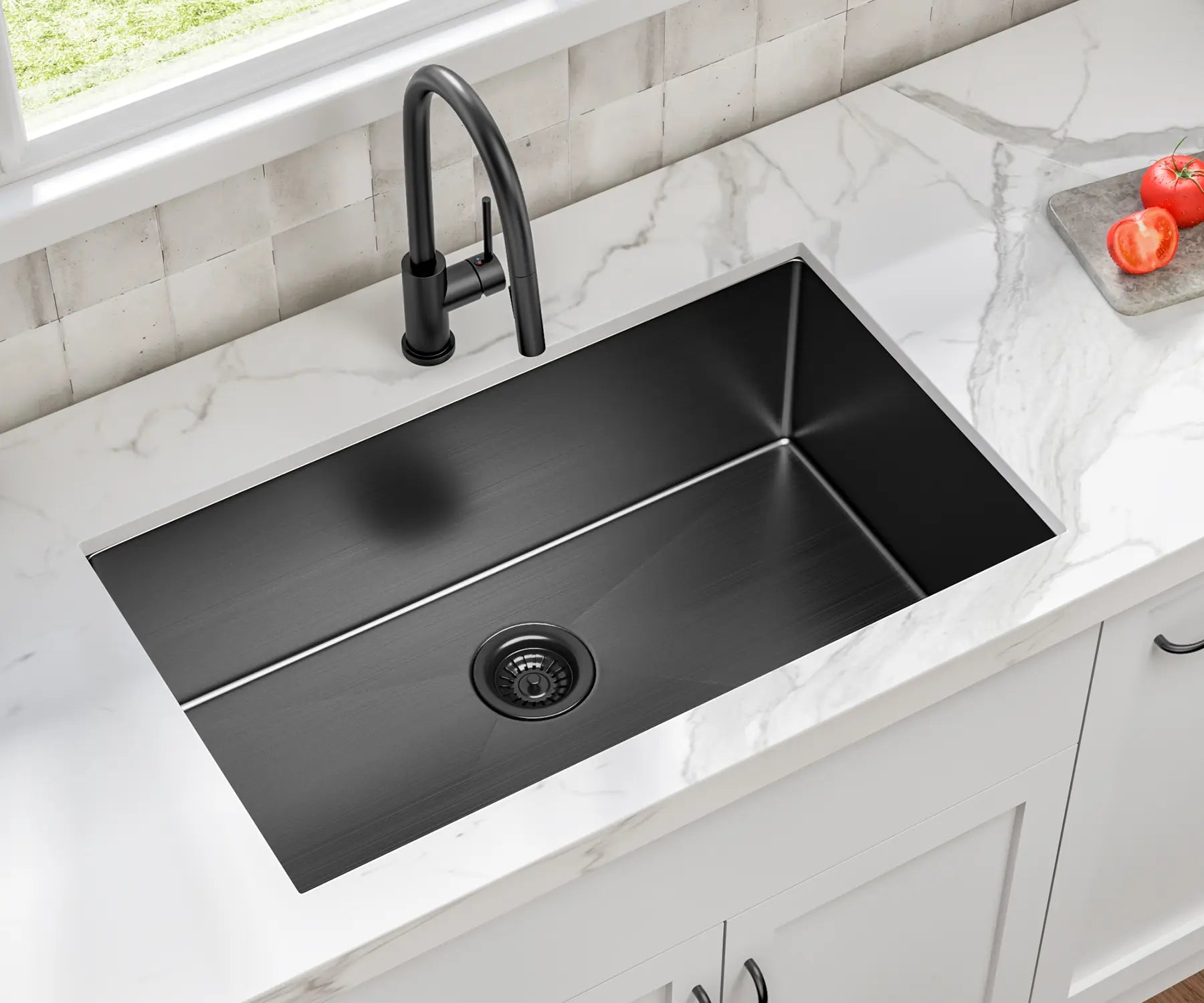
Undermount Kitchen Sinks
Stainless steel undermount kitchen sinks in standard sizes that align with common multifamily cabinet widths. Published cutout dimensions, consistent rim profiles, and undermount clip systems included with every sink. Sizes range from 23″ to 33″ single-bowl and 50/50 or 60/40 double-bowl configurations. Template one SKU, run the batch, move to the next job. The cutout template you program today works on the reorder six months from now.
Explore Undermount kitchen sinks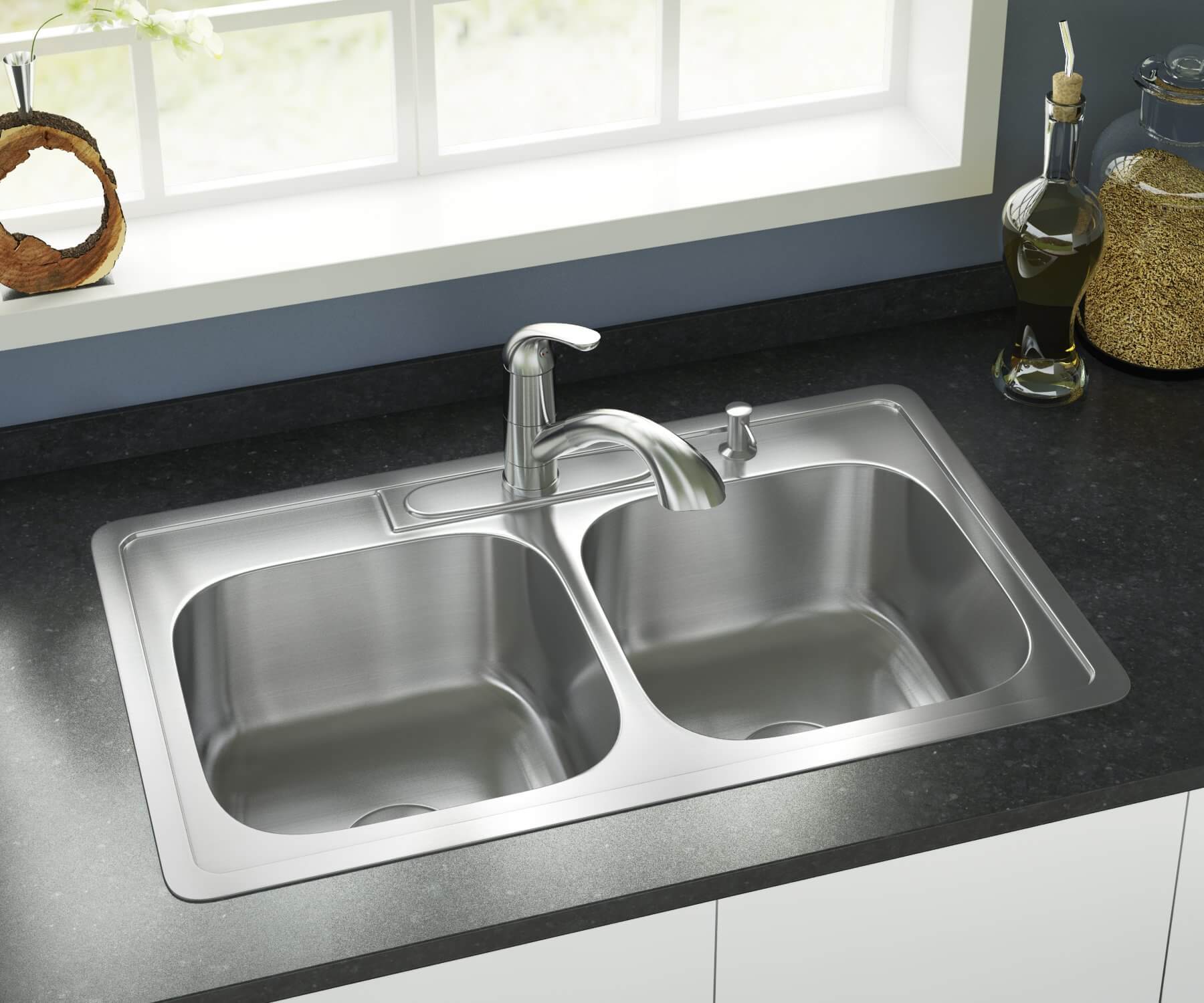
Top-Mount Kitchen Sinks
Top-mount kitchen sinks for builder projects using laminate, butcher block, or budget countertop materials. Standard cutout dimensions align with common countertop openings. Drop-in installation eliminates the undermount clip variable entirely, which simplifies production on high-volume, low-margin jobs where every minute of shop time matters.
Explore Top-Mount Kitchen Sinks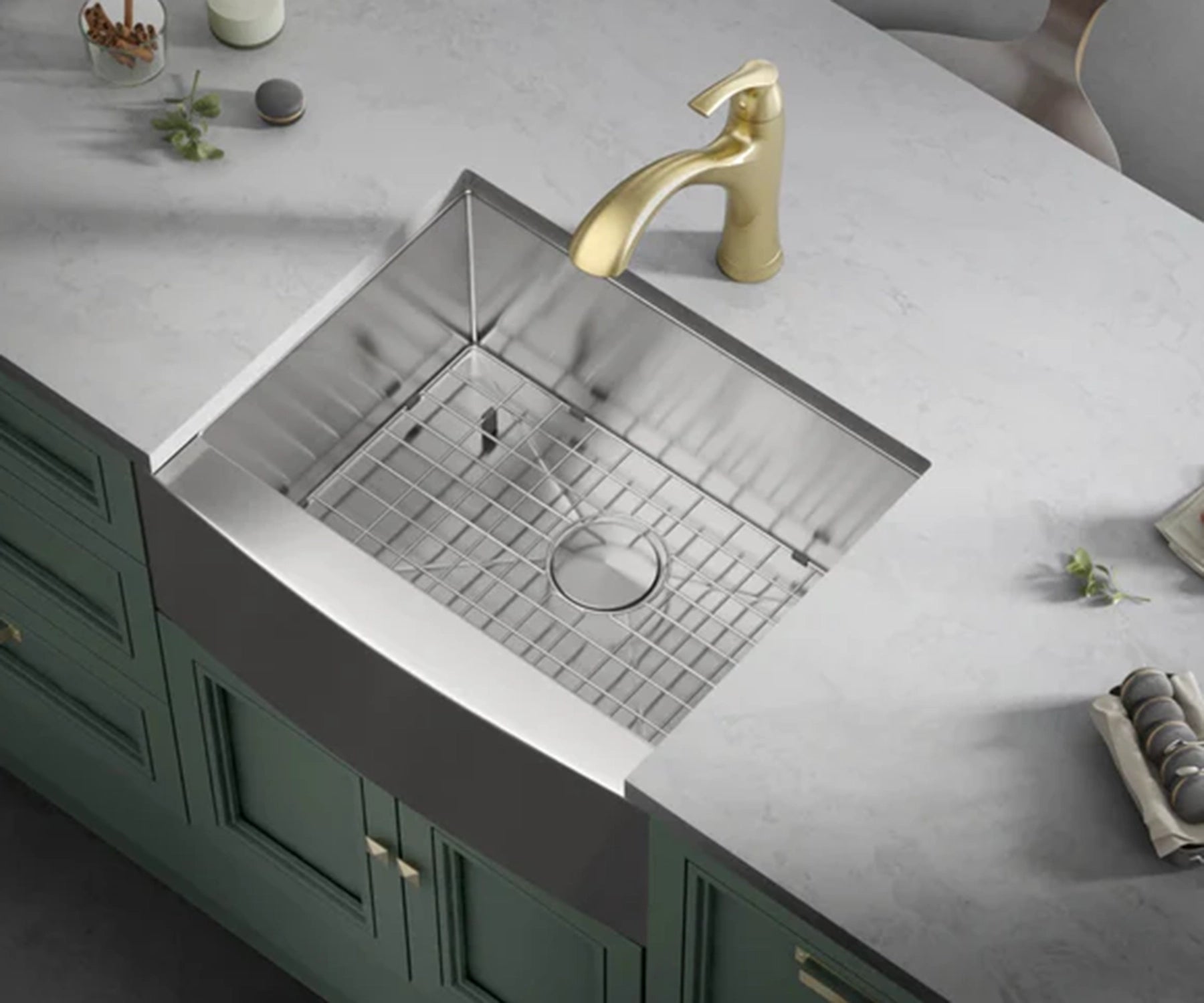
Farmhouse and Apron-Front Kitchen Sinks
Farmhouse sinks require a different cabinet and countertop integration than standard undermount models — and a different risk profile. The cabinet modification, structural support, and countertop cutout all depend on published apron dimensions, bowl depth, and weight. Allora USA spec sheets include every dimension the shop needs to plan the integration before the sink arrives, because a farmhouse sink that doesn’t match the cabinet prep is one of the most expensive rework scenarios in residential fabrication.
Explore Farmhouse Kitchen Sinks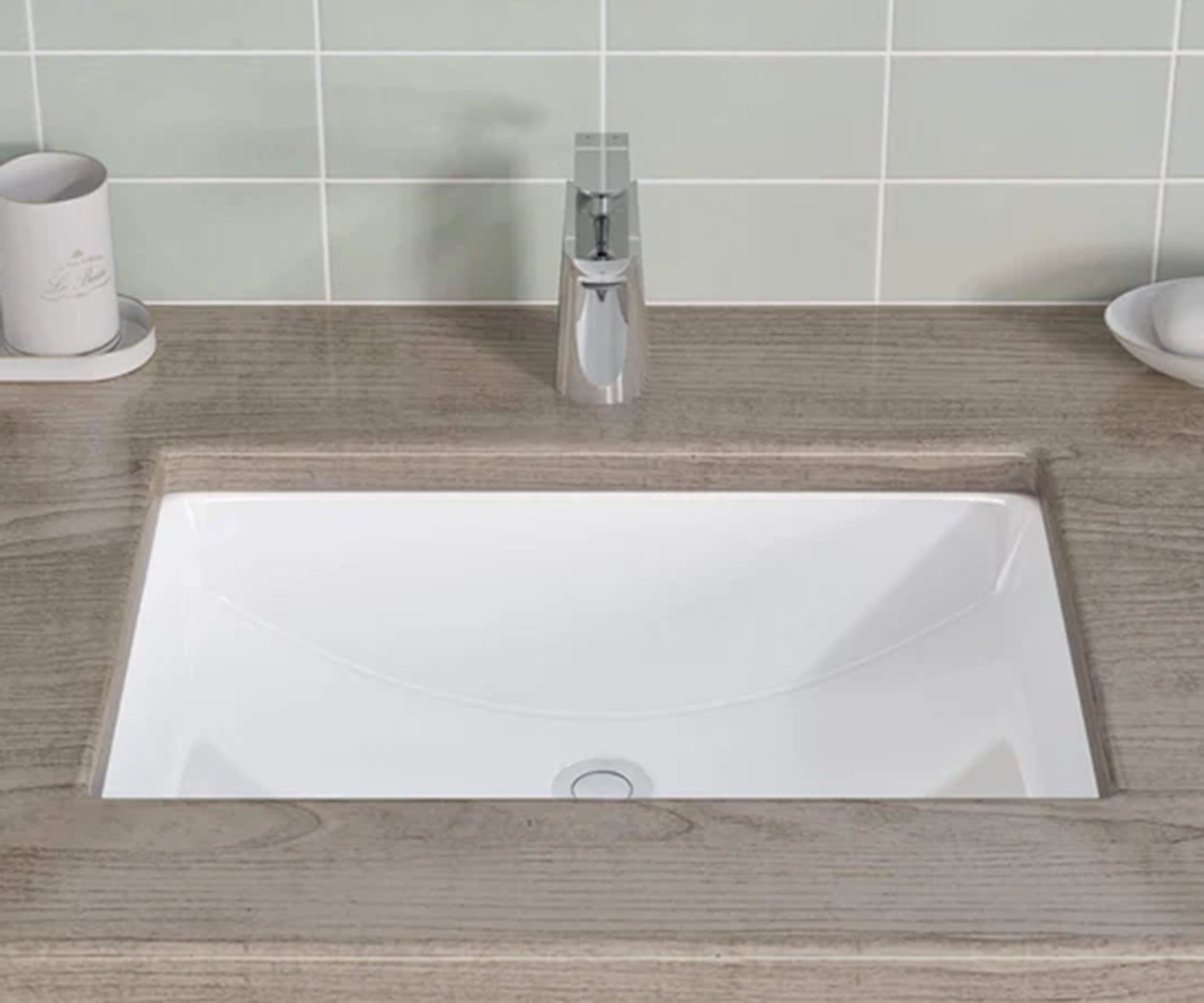
Undermount Bathroom Sinks
Undermount bathroom sinks in rectangular and oval configurations for vanity countertop fabrication. Consistent cutout dimensions across the product line simplify template programming when the same sink is specified across 50 or 200 vanities in a multifamily or hospitality project. One template, one setup, one production run — that’s where fabrication margin lives.
Explore Undermount Bathroom Sinks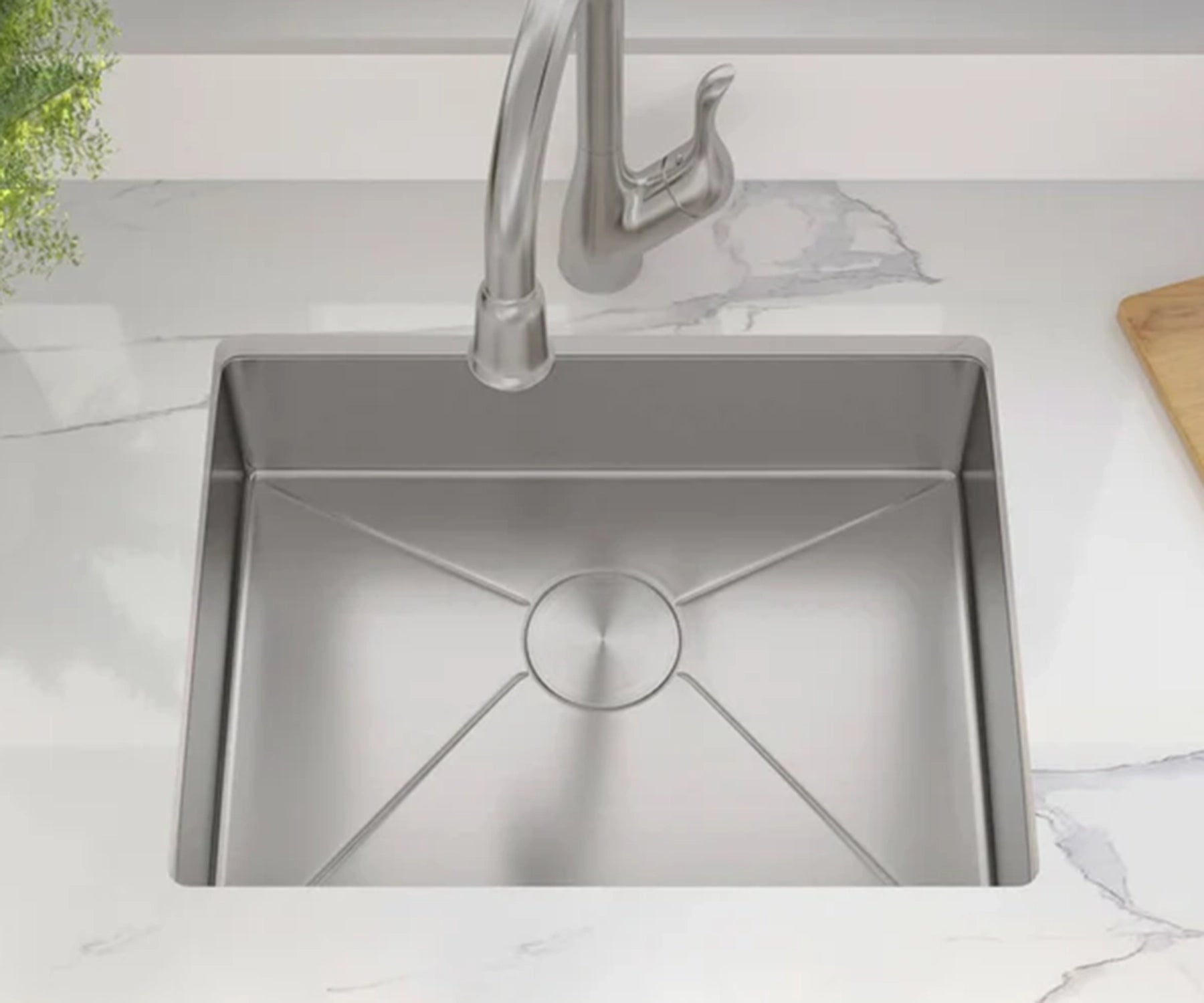
ADA-Compliant Sinks
ADA kitchen sinks and ADA bathroom sinks that meet accessible design targets while using the same cutout footprint as the standard product line. Fabricators can program ADA and standard templates in the same production run without switching between incompatible dimensional systems — which means accessible units don’t break your batch efficiency.
Explore ADA-Compliant FixturesFrom Quote to Reorder: How Fabricators Work with Allora USA
1. Quoting and Estimating: Locking the Sink Before You Lock the Slab
When a builder sends a scope, you need to quote fast with a known sink specification. If you’re chasing product confirmations from a distributor, the builder moves to the next fabricator. Allora USA trade accounts provide published pricing, confirmed dimensions, and real-time availability data so the shop can quote same-day with a locked sink spec — not a placeholder that might change after you’ve already committed to the job.
2. Templating and Programming: Confirming the Cutout Before the Saw Starts
Once the sink spec is locked, the fabricator programs the cutout template. This is the point of no return on material cost. Allora USA spec sheets include cutout dimensions, rim profile details, drain position offsets, clip positions, and minimum cabinet clearances — everything the shop needs to program a template from the spec sheet alone, without waiting for a physical sample. The template is verified before material is committed. Not after.
3. Production and Delivery: Sinks Arrive Before Slabs Hit the Saw
Fabrication shops run on production sequences tied to builder installation timelines. Sinks that arrive late or arrive short create a cascade inside the shop: slabs get staged without sinks, other jobs can’t move through the queue, and shop floor space — the most constrained resource in any fabrication business — gets consumed by work that can’t be completed. Allora USA provides confirmed inventory counts, phased delivery options, and warehouse depth from Sterling, Virginia. When the production board says Week 14, the sinks are on the shop floor before the slabs.
4. Reorder and Multi-Phase Projects: Same SKU, Same Template, Same Margin
Builder accounts often span multiple phases, buildings, or communities. When Phase 2 starts six months after Phase 1, the fabricator needs the same sink in the same dimensions at the same price. If the SKU changes, you re-template. If the price changes, you re-quote. If either happens on a job you already committed to, the margin you projected is gone. Allora USA maintains SKU continuity and trade pricing consistency for ongoing builder relationships. Reorders don’t require re-quoting, re-templating, or re-negotiating.
Trusted By












What Our Customers Are Raving About
Allora USA has been a game-changer for our fabrication business. Their high-quality sinks and faucets always impress our clients, and their reliable customer service ensures timely shipments, helping us avoid delays. We highly recommend them.
We’ve partnered with Allora USA on several residential and commercial projects, and they consistently deliver top-notch products. The variety of styles and finishes they offer ensures that we find the perfect match for each project. What stands out is their attention to detail and quick turnaround times. We consider Allora USA an essential part of our supply chain.
From initial consultation to final installation, Allora USA has been an exceptional partner. Their products not only meet our high standards of functionality and durability but also align with the aesthetic demands of our high-end projects. Their flexibility in handling bulk orders and customizing solutions for unique project requirements sets them apart from other suppliers.
Allora USA provides an incredible selection of sinks and faucets that elevate our kitchen and bathroom designs. Their team is always responsive, helping us source the perfect products for our clients’ specific needs. The combination of aesthetic appeal and functional reliability has made them our go-to supplier for the last five years. We can confidently say their products exceed industry standards.
Allora USA has been instrumental in ensuring the success of our large-scale development projects. The consistent quality of their products and their ability to meet tight deadlines has given us peace of mind. Their team is always proactive in resolving any challenges, making them a reliable partner we can count on.
Frequently Asked Questions
Yes. Stocked models carry repeatable dimensions so templates and cutouts stay consistent across slabs.
Yes. Specified sink models are held in stock for repeat slab and replacement work.
Yes. Cut sheets with cutout and rough-in dimensions are available for every model.
Yes. Allora stocks undermount, drop-in, farmhouse, and stainless steel kitchen sinks for apartment, multifamily, senior living, and commercial work.

Your Margin Starts with Your Sink Supplier
Allora USA works with countertop fabricators who source sinks in volume for builder accounts, developer projects, and commercial installations. Whether you’re quoting a 50-unit multifamily scope or standardizing sinks across a national builder program, the trade account is built for how your shop actually operates.
Trade accounts include:
Volume pricing structured for fabrication-shop order sizes
- Published cutout dimensions and template-ready spec sheets before ordering
- Confirmed inventory counts on volume orders
- SKU continuity and consistent trade pricing for multi-phase builder accounts
- Phased delivery aligned to your production board, not just the builder’s schedule
- Dedicated account support for fabrication shops
Call 571-291-3484 or apply for an Allora Advantage trade account to lock in pricing and lead times for your next project.